
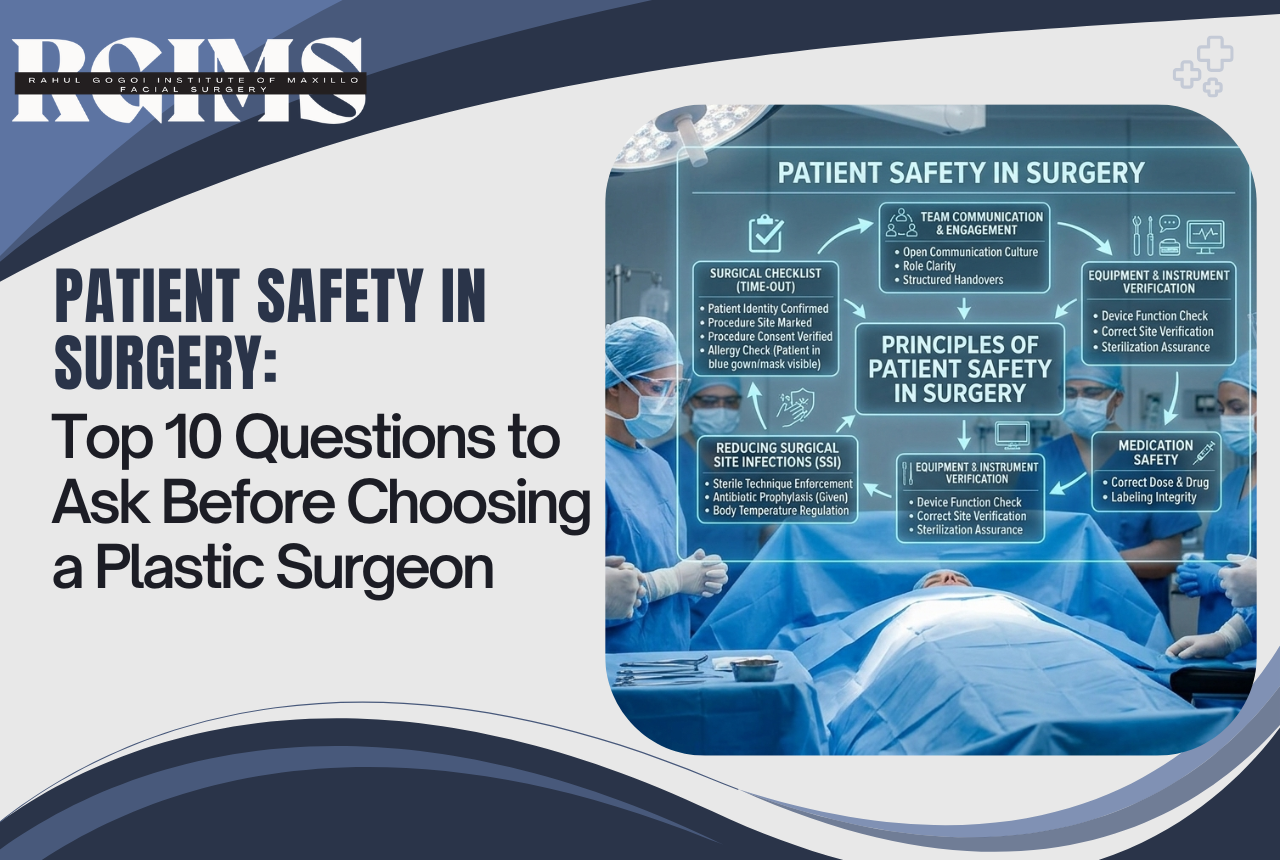
Deciding to undergo cosmetic surgery is one of the most personal and life-changing decisions you will ever make. Whether you are considering a rhinoplasty in Guwahati, a facelift, or a body contouring procedure, the single most important factor in your outcome is the surgeon you choose. At RGIMS — the first dedicated Cosmetic Surgery Centre in North East India, patient safety in Surgery is not just a policy; it is the foundation of every procedure we perform. In this guide, we walk you through the top 10 questions every smart patient should ask before choosing a plastic surgeon.
Why Asking the Patient Safety in Surgery
Cosmetic surgery is a medical procedure, not a beauty service. The risks, the recovery, and the results are all deeply influenced by the skill, experience, and ethical standards of your surgeon. Unfortunately, in India and globally, not every practitioner advertising cosmetic services is equally qualified. Asking the right questions protects your health, sets realistic expectations, and helps you build trust with your care team before a single incision is made.
According to the International Society of Aesthetic Plastic Surgery (ISAPS), a thorough consultation is as important as the surgery itself. Use these 10 questions as your personal safety checklist.
Question 1: Are You a Certified and Trained Plastic Surgeon?
This is the most critical question you can ask. In India, any licensed medical doctor can legally perform cosmetic procedures, even without specialized training in plastic or reconstructive surgery. That is a frightening reality that many patients are unaware of.
Before you book a consultation, confirm that your surgeon holds a recognised qualification in plastic and reconstructive surgery, such as an MCh in Plastic Surgery from an accredited Indian medical university. At RGIMS, our surgeons are formally trained specialists in facial plastic surgery and body procedures, not general practitioners offering cosmetic add-ons.
What to look for:
- MCh (Plastic Surgery) or equivalent postgraduate qualification
- Membership in recognized bodies such as the Association of Plastic Surgeons of India (APSI)
- Transparent display of credentials on the clinic website or reception
Question 2: How Much Experience Do You Have With This Specific Procedure?
There is a significant difference between a surgeon who performs rhinoplasty occasionally and one who specializes in it. Volume and repetition build mastery. A surgeon who focuses on a specific area of the face or body will have a deeper understanding of anatomical nuances, potential complications, and the aesthetic judgment required for natural-looking results.
At RGIMS, our team includes dedicated specialists for facial procedures (rhinoplasty, eyelid surgery, facelift, jaw surgery) and body procedures (breast implants, tummy tuck, body contouring) separately. This means you are always treated by a surgeon whose daily practice is focused on exactly what you need.
Ask specifically:
- How many times have you performed this exact procedure?
- Do you perform this procedure as a significant part of your practice?
- Have you handled complications from this procedure before, and how?
Question 3: Can I See Before-and-After Photos of Your Patients?
A reputable surgeon will have an organized and honest portfolio of their work. Before-and-after photos give you a realistic preview of what is achievable, and they also reveal the surgeon’s aesthetic style. Every surgeon has a slightly different sense of what looks balanced and natural. You want your tastes to align with theirs.
We recommends asking to see a photo gallery that specifically includes patients with similar anatomy or concerns to your own. Pay attention to symmetry, natural appearance, and long-term follow-up results rather than just immediate post-surgical photos.
Red flags to watch for:
- Only a handful of photos, or photos without clear context
- No long-term follow-up images
- Results that look overdone or inconsistent
Question 4: What Are the Risks of This Procedure, and How Do You Manage Them?
Every surgical procedure carries inherent risks, including infection, scarring, asymmetry, anesthesia reactions, and rare but serious complications. A surgeon who minimizes these risks or avoids discussing them is not looking out for your best interests. Transparency about risks is actually a sign of confidence and ethics.
During your consultation at RGIMS, our surgeons spend dedicated time explaining both the benefits and potential complications of each procedure. We believe an informed patient is a safer patient. You should understand what can go wrong, how likely it is, and exactly what steps our team will take if complications arise.
Question 5: Is the Surgical Facility Accredited and Well-Equipped?
Where your surgery takes place is just as important as who performs it. A well-equipped, accredited surgical facility must meet strict hygiene, safety, and emergency response standards. An underequipped facility cannot protect you if something unexpected happens during or after the procedure.
RGIMS operates as North East India’s first dedicated cosmetic surgery centre, with state-of-the-art operating theatres, sterilization protocols, and certified support staff. Our facility is purpose-built for cosmetic and reconstructive surgery, not a converted general clinic.
Questions to ask about the facility:
- Is this an accredited surgical centre?
- What emergency equipment and protocols are in place?
- Who else will be in the operating room, and what are their qualifications?
Question 6: Who Will Administer My Anesthesia?
Anesthesia is one of the most complex and consequential parts of any surgery. It should only be administered by a qualified anesthesiologist (MD) or a trained certified nurse anesthetist. This is not an area to cut costs or corners.
Ask your surgeon directly: who will be responsible for your anesthesia, what type will be used for your procedure, and how will your safety be monitored during surgery. At RGIMS, every procedure involving sedation or general anesthesia is managed by a qualified anesthesia professional, not delegated to general support staff.
Question 7: What Is the Expected Recovery Timeline?
Recovery from cosmetic surgery is not a one-size-fits-all experience. It depends on the procedure, your age, overall health, and lifestyle habits like smoking or alcohol use. Knowing what to expect helps you plan your personal and professional life around your recovery, reducing stress and improving outcomes.
For example, recovery from a rhinoplasty typically involves visible swelling and bruising for one to two weeks, with final results becoming clear over three to six months. A breast augmentation patient may return to light activity within a week but should avoid strenuous exercise for four to six weeks. Your surgeon should give you a clear, personalized recovery plan, not a vague general estimate.
Key recovery questions to ask:
- When can I return to work or daily activities?
- What activities must I avoid and for how long?
- What signs or symptoms should prompt me to contact you immediately?
Question 8: What Is Included in the Cost, and Are There Any Hidden Fees?
A price quote that seems surprisingly low may not include anesthesia fees, facility charges, post-operative medications, follow-up visits, or compression garments. Bargain pricing in cosmetic surgery is a serious red flag. Surgeons who cut costs often cut corners on safety measures, qualified staff, or quality materials.
At RGIMS, we provide transparent, detailed pricing that outlines what is included in your treatment package. We believe honest financial conversations are part of ethical patient care. Ask for a written breakdown of all costs before you commit.
Things to confirm are included:
- Surgeon’s fee
- Anesthesiologist’s fee
- Facility and operating room charges
- Pre-operative tests and consultations
- Post-operative follow-up visits
Question 9: What Happens If I Am Unhappy With My Results?
This is a question many patients feel uncomfortable asking, but it is essential. Even in the best hands, results can occasionally fall short of expectations. The difference between a trustworthy surgeon and an unreliable one often shows up in how they handle post-operative concerns.
Every experienced surgeon should be able to clearly explain their approach to patient satisfaction after surgery, including revision options, timelines for evaluation, and how disputes are handled. A surgeon who avoids or dismisses this question is one to walk away from.
Question 10: Are You the Right Surgeon for ME Specifically?
This final question is perhaps the most nuanced. Beyond credentials and portfolio, you need a surgeon who understands your unique anatomy, your cultural aesthetic preferences, and your personal goals. A nose that looks beautiful on one face may not suit another. A body contouring result that is ideal for one body type may be inappropriate for another.
At RGIMS, every consultation begins with an in-depth discussion of your goals, your medical history, and a careful physical assessment. Our surgeons take pride in recommending what is genuinely right for each patient, not what is most profitable or most popular. Sometimes the right answer is to wait, modify the plan, or choose a less invasive alternative.
Why Patients Across North East India Trust RGIMS
RGIMS is not just another cosmetic clinic. It is North East India’s first and most comprehensive dedicated cosmetic surgery centre, offering facial plastic surgery, body plastic surgery, non-surgical aesthetic treatments, and specialist procedures all under one roof. Our team includes:
- Dedicated facial plastic surgeons for rhinoplasty, eyelid surgery, jaw surgery, facelift, and more
- Body surgery specialists for breast implants, tummy tuck, liposuction, and body contouring
- Specialist practitioners for Botox and fillers, hair transplant, skin lasers, and hair removal
- Trained nurses for eyelash treatments, lip pigmentation, and advanced skin care
Choosing RGIMS means choosing a team that is purpose-built for cosmetic excellence, with the accountability, experience, and patient-first culture that your safety and satisfaction deserve.
Conclusion: Your Questions Are Your Protection
Choosing a plastic surgeon is not a decision to make based on price alone, social media popularity, or convenience. It is a decision that requires informed questioning, careful evaluation, and a genuine sense of trust. The 10 questions above are your starting point for that evaluation.
If you are ready to begin your cosmetic surgery journey in a safe, professional, and welcoming environment, we invite you to book a consultation at RGIMS. Our specialists are ready to answer every one of these questions honestly and help you make the decision that is right for your body, your goals, and your peace of mind.
Frequently Asked Questions (FAQ)
Q1: What is the most important question to ask before choosing a plastic surgeon?
The most important question is whether your surgeon is formally trained and qualified in plastic and reconstructive surgery. In India, any doctor can legally offer cosmetic services, so verifying specific training credentials such as an MCh in Plastic Surgery is essential for patient safety.
Q2: How do I know if a cosmetic surgery clinic is safe?
Look for a dedicated surgical facility with accredited operating theatres, qualified anesthesia professionals, sterilized environments, and trained support staff. The clinic should also be transparent about its credentials, affiliations, and emergency protocols. RGIMS, as North East India’s first dedicated cosmetic surgery centre, meets all of these standards.
Q3: Is RGIMS suitable for first-time cosmetic surgery patients?
Absolutely. RGIMS welcomes patients who are exploring cosmetic surgery for the first time. Our team conducts thorough consultations, explains all options honestly, and never rushes a patient into a procedure they are not ready for. Visit rgims.in to learn more or schedule a consultation.
Q4: What procedures does RGIMS specialize in?
RGIMS offers a wide range of facial and body procedures including rhinoplasty, eyelid surgery, jaw surgery, facelift, eyebag removal, neck and chin liposuction, hair transplant, breast implants, buttock implants, fat grafting, tummy tuck, body contouring, Botox, fillers, skin laser treatments, and hair removal laser services.
Q5: How do I prepare for my first plastic surgery consultation?
Come prepared with a clear idea of your goals, your full medical history including current medications, and a list of questions similar to the ones in this article. Bring reference photos if you have them, and be honest about your expectations. A good surgeon will meet your openness with equal transparency.
Q6: Does cosmetic surgery at RGIMS require a referral?
No referral is needed. You can contact RGIMS directly to schedule an initial consultation with one of our specialists. We serve patients from across Assam and the wider North East India region.
Q7: How long does recovery typically take after cosmetic surgery?
Recovery varies by procedure. Minimally invasive treatments like Botox or fillers have no downtime. Surgical procedures such as rhinoplasty or breast augmentation typically require one to two weeks before returning to light activity, with full results visible over several months. Your surgeon will provide a personalized recovery plan at your consultation.